How Stylish People Dress for Luxury Hotels, Resorts & Cities
The most stylish people I’ve encountered are rarely the most obvious.
They don’t enter a room demanding attention. If anything, their presence settles into the environment naturally—as though they understand exactly where they are, and how they’re meant to move within it. Nothing feels forced. Nothing feels overconsidered. Their clothing doesn’t compete with the room, yet somehow it becomes part of the atmosphere itself.
That distinction changed the way I began to think about style.
For a long time, fashion felt tied to visibility. Trends moved quickly, logos became louder, and getting dressed often felt connected to being noticed first. But over time, especially through travel, my perspective shifted. The people with the strongest sense of style were rarely the ones dressing for immediate attention. They dressed for alignment—for the environments they moved through, the pace of their lives, and the version of themselves they felt most comfortable inhabiting.
I noticed this most clearly during an evening in Paris last spring, seated near the terrace of a softly lit restaurant just off the Right Bank. The room itself was understated—warm lighting reflecting against glassware, low conversation carrying between tables, waiters moving with a kind of quiet precision that made everything feel unhurried. Yet almost everyone inside looked remarkably composed.
Not overly styled.
Not performative.
Just deeply comfortable in their own aesthetic.
A man seated near the window folded a navy cashmere coat carefully over the back of his chair before ordering another espresso. Across the room, a woman in black tailoring and understated gold jewelry looked impossibly elegant in a way that felt effortless rather than constructed. Nothing appeared trend-driven. No visible logos. No pieces competing for attention.
No one looked dressed for photographs.
They looked dressed for the environment.
And to me, that may be the real difference between fashion and style.
Fashion reacts.
Style understands.
The people who move through the world most beautifully seem to understand that clothing changes depending on context—not to impress others, but to create harmony between themselves and the spaces they enter. A tailored coat feels different walking through the lobby of Hotel du Cap-Eden-Roc than it does rushing through an airport terminal. Relaxed linen feels appropriate at a seaside lunch along the Mediterranean because the environment calls for ease rather than structure.
The clothing itself becomes part of the atmosphere.
That awareness is what makes personal style feel refined rather than performative.
It’s also why I’ve become increasingly drawn to wardrobes built around simplicity and repetition instead of excess. The pieces I return to most are rarely the loudest ones. A perfectly structured blazer worn repeatedly across different cities. Loafers softened naturally over years of travel. Soft knits that move seamlessly from long-haul flights to dinner reservations hours later.
The best pieces don’t interrupt movement.
They support it.
And nowhere does that become more noticeable than while traveling.
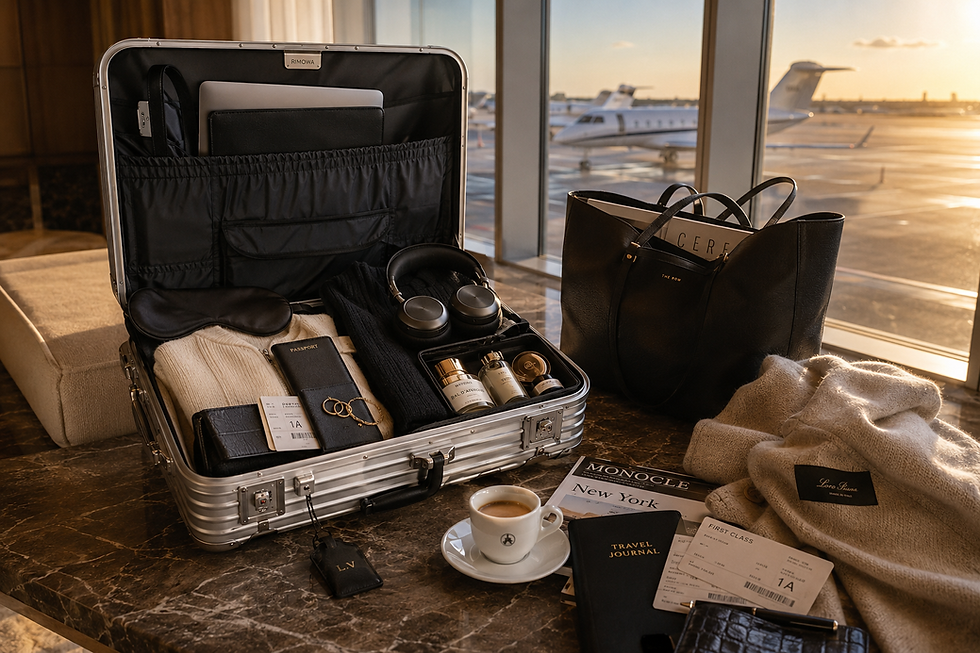
I’ve learned that style in motion depends less on variety and more on consistency. A well-packed wardrobe eliminates unnecessary decisions. The right coat should move effortlessly from airport arrival to late dinner reservations. The same sunglasses worn walking through the streets of Milan should feel equally at home beside an espresso the following morning in New York.
Over time, getting dressed becomes less about creating a new version of yourself and more about refining the one that already exists.
That, to me, is where true style begins.
Not in trend cycles or constant reinvention, but in familiarity. In understanding how you want to feel when you enter a room. In knowing which pieces consistently reflect that feeling, regardless of where in the world you happen to be.
And increasingly, that kind of restraint feels far more luxurious than excess ever did.
The people with the strongest personal style rarely appear as though they are trying to belong in a space. They dress as though belonging has already been established. Their confidence comes not from standing apart from the environment, but from moving within it naturally.
Style has always felt connected to movement, hospitality, and atmosphere rather than seasonal trends. The environments we enter shape how we experience ourselves within them, and the most compelling wardrobes are often the ones built with that understanding in mind.
Not louder.
Not trend-driven.
Not overworked.
Just thoughtful clothing chosen well enough to move effortlessly through a life already in motion.
Because the people with the strongest sense of style rarely appear dressed for the moment alone.
They appear dressed for the world they already know they belong to.


Comments