Why Heirlooms Matter More Than Ever in Luxury Living

Not everything worth keeping is expensive.
Some objects become valuable slowly, almost imperceptibly, through repetition and memory rather than acquisition. A watch worn often enough for the leather to soften naturally around the wrist. A passport holder marked subtly at the corners after years of movement through different cities. A fountain pen carried from dinner meetings to long-haul flights until it becomes difficult to imagine traveling without it.
These are not simply possessions.
They become part of the rhythm of a life.
In an era increasingly shaped by immediacy, there is something unusually grounding about objects that remain. Not because they are untouched, but because they are used well. The appeal is rarely perfection. If anything, it’s the opposite. The slight wear on a leather weekender after seasons of travel. The faint scratches across a watch face picked up somewhere between airports, late dinners, and everyday movement. The softened structure of a linen jacket carried through summer after summer along the coast.
The signs of life are what make the object matter.
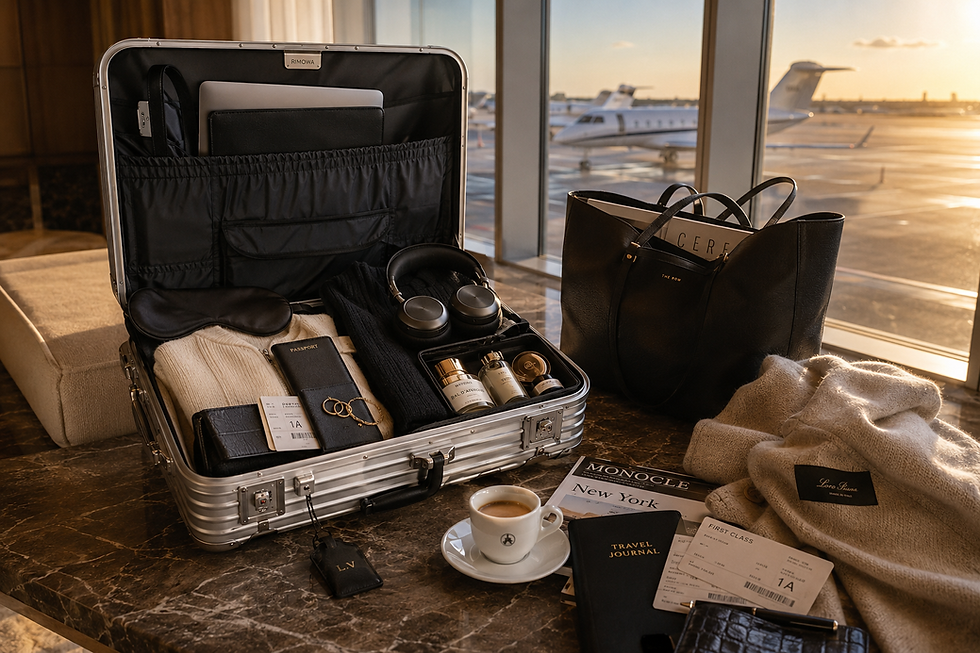
I noticed this recently while unpacking after a trip, placing the same leather travel case onto a hotel dresser that has followed me through more cities than I can count. Somewhere between New York, Paris, and the South of France, it stopped feeling like an accessory and started feeling familiar—less something packed for convenience and more something quietly woven into the experience itself.
That is the difference between ownership and attachment.
The most meaningful objects are rarely the newest ones. They are the pieces that move with someone long enough to absorb memory. A cashmere coat folded carefully over the back of a restaurant chair every winter. Jewelry passed between generations and worn not for occasion, but out of habit. A lighter used during long dinners that somehow becomes inseparable from the atmosphere of those evenings years later.
Over time, these objects begin to say something about the person carrying them.
Not loudly.
Not performatively.
But through consistency.
The notebook always brought onto flights. The sunglasses placed beside an espresso each morning while traveling. The same overnight bag resting quietly in the corner of a suite in Milan, then again weeks later in New York. Small rituals repeated often enough that they become signatures without ever intending to.
This is what separates personal style from consumption.
True luxury has never been about constant replacement. In fact, the most stylish people tend to return to the same pieces repeatedly—objects that age well, travel well, and feel better with time. They understand that familiarity itself can become elegant. A beautifully worn object carries something a brand-new purchase often cannot: history.
And history gives objects weight.
This may explain why heirloom pieces continue to resonate so deeply, even now. Not because they are rare, but because they create continuity in lives increasingly shaped by movement. A familiar watch clasped before boarding a flight. A favorite pen pulled from a coat pocket before dinner reservations in another city. A travel bag resting beside a hotel chair exactly where it has rested dozens of times before.
The object remains, even as everything around it changes.
At its best, personal style works the same way. It evolves gradually, shaped less by trends and more by repetition, memory, and refinement. The people with the strongest sense of style are rarely the ones chasing constant novelty. More often, they are the ones who understand themselves well enough to recognize what deserves to stay.
That philosophy feels naturally connected to the way we think about travel, taste, and movement. The pieces worth carrying are rarely the loudest ones. They are the objects that integrate quietly into a life well-lived, gathering meaning through use rather than display.
Because in the end, the most valuable things people own are rarely valuable because of what they cost.
They are valuable because of where they’ve been.
Heirlooms matter because they create timeless memories.


Comments